

How an Old Knee Injury Can Lead to Chronic Pain Years Later
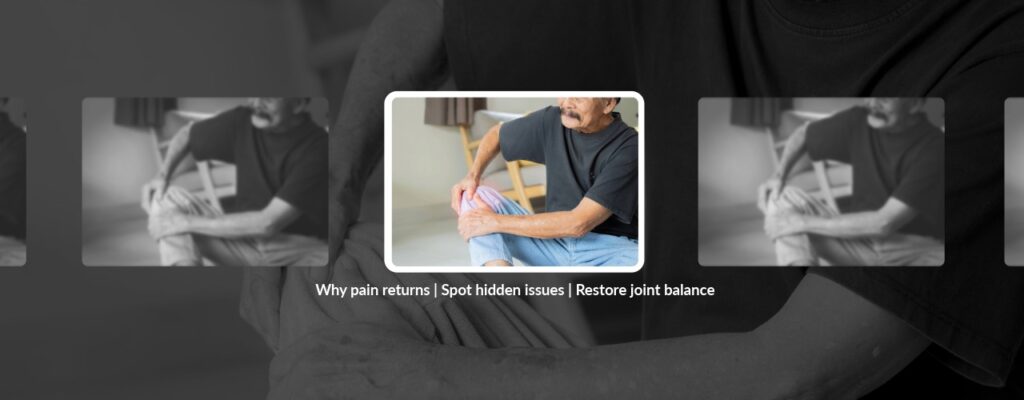
If you are dealing with knee pain from injury, you might find it frustrating that a mishap from a decade ago is suddenly causing trouble today. It’s a common story in physical therapy clinics: a patient walks in with nagging, persistent discomfort that seems to have appeared out of nowhere. They haven’t tripped recently, they haven’t changed their workout routine, and there was no snap or pop.
However, when we dig into their medical history, we find the culprit: a high school football tackle, a skiing mishap in their 20s, or a minor car accident from a decade ago.
While you may have recovered from the initial trauma at the time, the body has a long memory. Understanding how knee pain from injury can resurface years later is the first step toward stopping the cycle of chronic pain.
The Ghost of Injuries Past
Most people assume that once the swelling goes down and they can walk again, the injury is over. But internal changes often persist. One of the primary drivers of delayed pain is post-traumatic osteoarthritis (PTOA).
Unlike “wear and tear” arthritis that comes with general aging, PTOA is triggered by a specific event. Even if a ligament or meniscus heals, the trauma can change the biology of the joint fluid or leave the cartilage slightly less resilient. Over 5, 10, or 20 years, these microscopic changes accumulate into the chronic ache you feel today.
The Kinetic Chain: Trading Mobility for Stability
The human body is a master of compensation. If you injured your right ACL years ago, your brain likely subconsciously taught you to offload that weight. You might lean slightly to the left, or your hip might hike to help you clear your foot while walking.
In the short term, this is a brilliant survival mechanism. In the long term, it’s a recipe for chronic pain. When one link in the kinetic chain—the knee—isn’t moving optimally, the links above (the hip) and below (the ankle) have to work overtime. Eventually, the knee becomes the victim of poor mechanics elsewhere in the body. One of our Marketplace Physical Therapy & Wellness Center physical therapists acts as a detective, tracing the pain back through these links to see where the movement pattern first broke down.
Is Your Old Knee Injury Resurfacing?
It can be difficult to tell if your current discomfort is related to the past. Look for these signs and symptoms in your movement:
Morning Stiffness
- Your knee feels rusty for the first twenty minutes of the day.
Asymmetrical Fatigue
- One leg feels significantly more tired than the other after a walk.
Loss of Full Range
- You can no longer fully straighten or bend the knee compared to the good side.
Weather Sensitivity
- The joint aches or feels heavy when the barometric pressure drops.
Instability
- A feeling that the knee might give out during quick pivots or stairs.
Why Rest Isn’t the Answer
If your knee pain from injury is resurfacing now, simply resting or taking anti-inflammatories likely won’t provide a permanent fix. Those methods treat the symptom, but they don’t address the compensation. Physical therapy focuses on:
Gait Analysis
- Identifying subtle limps or shifts in your stride.
Strength Symmetry
- Ensuring the quadriceps and hamstrings on your old injury side are just as capable as the healthy side.
Neuromuscular Re-education
- Teaching your brain to trust the joint again so you stop overcompensating.
Schedule Your Movement Assessment Today
You do not have to just live with the ghost of an old injury. At Marketplace Physical Therapy & Wellness Center, we do the work required to find the root cause of your pain. By identifying how your movement has shifted over the years, we can restore balance to your joints and stop the cycle of chronic pain for good.
Contact us today to book a comprehensive evaluation and get back to the activities you love.