

Understanding Pain From Degenerative Disc Disease
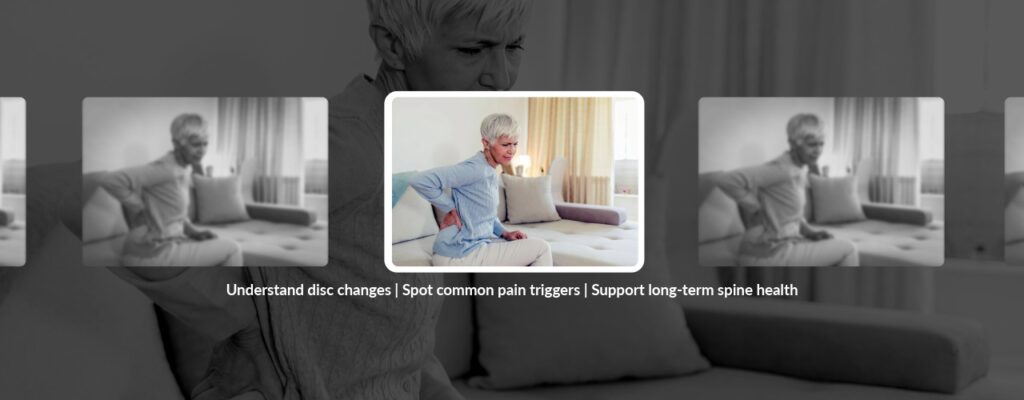
Degenerative disc disease pain is one of the most common reasons adults seek orthopedic care, yet it is also one of the most misunderstood. Many people hear the word degenerative and assume the worst, picturing a condition that will only get worse over time. The reality is more nuanced. Understanding what degenerative disc disease actually is, what drives the pain, and how physical therapists evaluate and treat it can help you make confident decisions about your care.
What Degenerative Disc Disease Actually Is
Degenerative disc disease is not a disease in the traditional sense. It is a term used to describe natural changes that occur in the spinal discs over time. The discs sit between the vertebrae of the spine and act as cushions that absorb load and allow movement. As the body ages, these discs gradually lose hydration and flexibility. For many people, this process causes no symptoms at all. For others, the changes create conditions that irritate surrounding nerves and tissue, producing pain that can range from a dull background ache to sharper discomfort with certain movements.
Why It Causes Pain for Some People and Not Others
The presence of disc changes on imaging does not automatically mean pain. What matters is whether those changes are affecting the surrounding structures. Common contributors to degenerative disc disease pain include:
- Disc changes that reduce the space available for nearby nerve roots, leading to irritation or compression
- Loss of disc height that alters how load is distributed across the spine during movement
- Muscle weakness in the core and hips that increases stress on spinal structures during daily activity
- Movement patterns that repeatedly load the spine unevenly and accelerate irritation over time
- Inflammation in the surrounding tissue that sensitizes the area and amplifies pain signals
What It Feels Like in Daily Life
Degenerative disc disease pain tends to behave differently depending on the person and the structures involved. Many people describe a deep, persistent ache in the lower back that worsens after sitting for long periods or after prolonged standing. Some notice that the pain eases with gentle movement and returns with rest. Others experience sharp discomfort with bending forward, lifting, or transitioning from sitting to standing. When nerve tissue is involved, symptoms can travel into the buttock or down the leg, producing tingling, burning, or numbness alongside the back pain. Daily tasks such as getting dressed, carrying groceries, or working at a desk can all become effortful when symptoms are active.
If these symptoms sound familiar and are affecting your daily routine, contact Marketplace Physical Therapy & Wellness Center to schedule an evaluation.
What the Evaluation at Marketplace Physical Therapy & Wellness Center Looks For
Identifying the true drivers of degenerative disc disease pain requires a thorough evaluation that goes beyond imaging findings. The clinician at Marketplace Physical Therapy & Wellness Center assesses several key areas:
- How the lumbar spine moves through its range and where restriction or pain provocation occurs
- Nerve tension testing to determine whether nerve roots are contributing to symptoms
- Core and hip muscle strength to identify weakness patterns that increase spinal load
- Functional movement quality to assess how the spine handles the demands of daily activity
How Treatment Helps
Physical therapy at Marketplace Physical Therapy & Wellness Center focuses on reducing pain, restoring movement, and building the strength the spine needs to function well despite disc changes. Manual therapy addresses joint stiffness and soft tissue tension that contribute to pain and limit movement. Therapeutic exercise rebuilds the core and hip strength that protects the spine during everyday tasks. Movement education helps patients understand which positions and habits load the spine unevenly and how to modify them. Postural training supports better spinal alignment during work, rest, and activity. Each element of care is matched to what the evaluation reveals and what the patient needs to return to daily life with confidence.
When to Seek Care for Degenerative Disc Disease Pain
Several signs indicate that professional evaluation should not be delayed:
- Pain that has persisted for more than a few weeks without meaningful improvement
- Symptoms that are traveling into the leg, particularly with numbness or tingling
- Increasing difficulty with basic daily tasks such as walking, sitting, or sleeping
- A pattern of recurring flare-ups that are becoming more frequent or more intense
- Any loss of bladder or bowel control, which requires immediate medical attention
Making Sense of What Your Spine Is Telling You
At your first visit to Marketplace Physical Therapy & Wellness Center, your clinician will take time to understand your history, how your symptoms behave, and what you want to get back to doing. The evaluation is designed to identify the real drivers of your pain and build a plan that fits your life. Contact Marketplace Physical Therapy & Wellness Center to schedule your evaluation and take the first step toward understanding and managing your degenerative disc disease pain with confidence.